













What Is the Difference Between BJD and MJD? A Beginner’s Guide
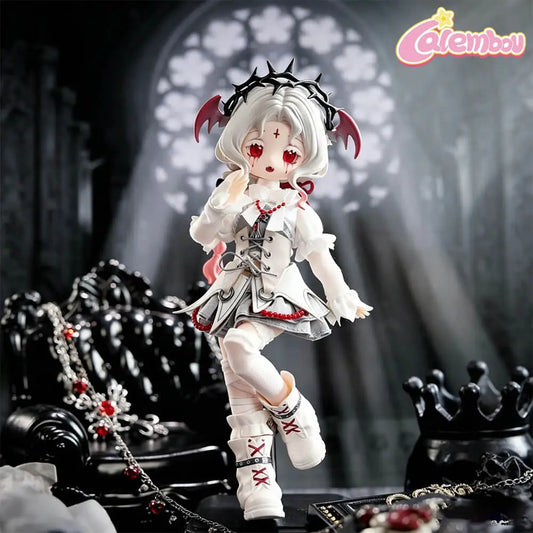
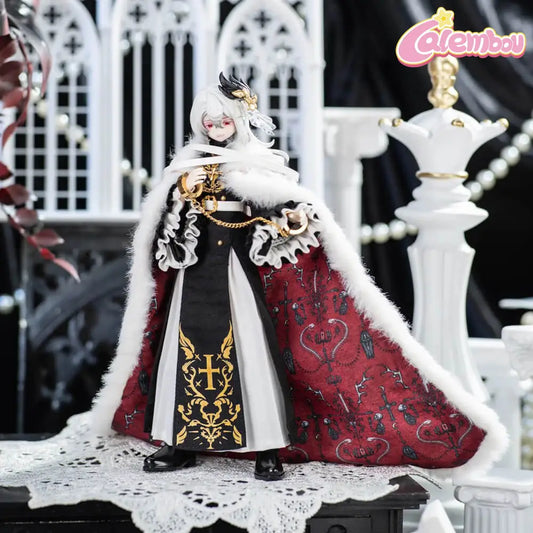
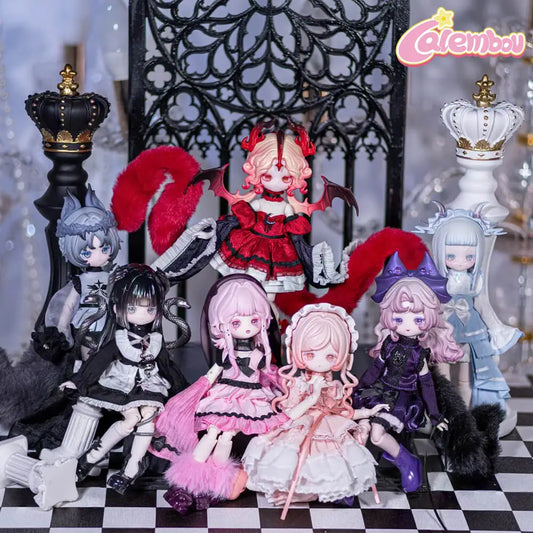
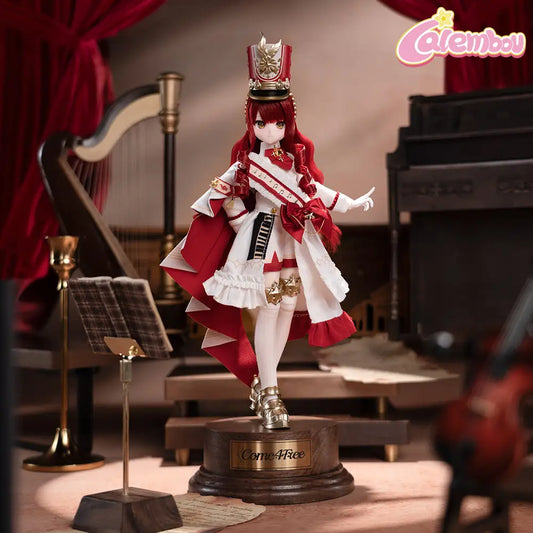
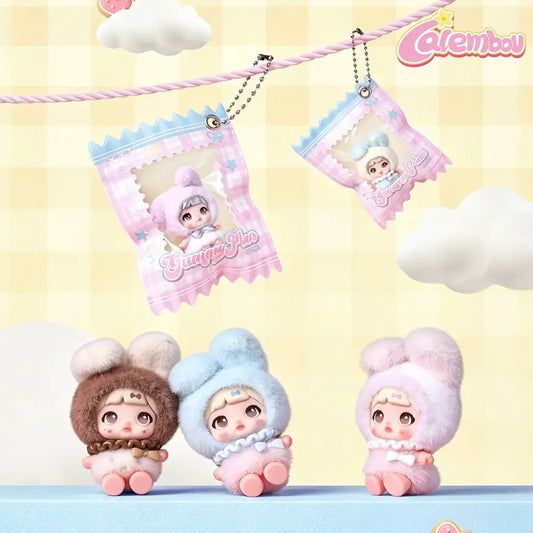
With the rise of articulated blind box dolls, collectors often confuse BJD and MJD. The fundamental difference lies in their construction.
Ball-jointed dolls (BJD) use internal elastic cords to connect the various parts, emphasizing realistic skeletal structures and a wide range of joint motion. In contrast, mechanically jointed dolls (MJD) use internal mechanical skeletons and friction hinges. Ball-jointed dolls are favored for their exquisite and realistic appearance and flexible poses, while mechanically jointed dolls are designed with playability in mind, offering easier and more flexible joint replacements and a more stable and sturdier structure for better posing.
But how exactly do these differences in construction affect your experience? Let's delve into the differences between each doll.
1. Internal Structure: String vs. Mechanical
The fundamental difference between the two lies in their internal structure. This internal structure determines all aspects of the doll's behavior, from its movements to its lifespan.
BJD: The "Elastic String" System
Ball-jointed dolls are hollow. Inside, thick, elastic ropes connect the head, torso, arms, and legs.
-
How it works: It resembles a beaded necklace. The tension of the elastic cord pulls the various components together, connecting them to a ball joint.
MJD: The "Mechanical Hinge" System
MJDs are more like standard action figures or assembled robot models, with each joint part assembled together using a mechanical snap-fit structure.
-
How it works: MJDs do not use strings. Instead, they rely on physical mechanical connections. An arm might attach to the shoulder with a plastic peg that snaps into a hole, while knees use hinge mechanisms.

2. Posing: Fluidity vs. Stability
Players enjoy posing these two dolls in different ways to decorate them, but there are still some differences between them.
BJD: flexibility
-
The Advantage: Because ball-jointed dolls (BJDs) use ball joints connected by elastic cords, there are virtually no angle limitations. You can smoothly adjust their poses to a wide range of angles. This allows for a greater variety of natural and graceful poses.
-
The Limitation (Elasticity): The disadvantage of elastic ropes also lies in their elasticity. If the string is strung too tightly, or if you try to bend a joint too far (past the limit of the sculpt), the tension might cause the limb to "spring back" (kickback) to a straight position.
MJD: Mechanical Stability
-
The Advantage: MJD joints rely on joint clips for stability. Once the joint is bent to a specific angle, it remains at that angle, providing excellent stability. Because there is no "flexibility," MJD joints are ideal for maintaining precise postures or balancing heavy accessories without wobbling.
-
The Limitation (Joint Restrictions): The range of motion of an MJD joint is limited by the physical design of its hinge or ball-and-socket mechanism. If the joint ball cannot rotate freely, you must move along a specific trajectory of the joint.
3. Changing Parts: Convenience
Customizing a doll by changing joint parts (such as hands, head, body, etc.) is a major source of fun. However, the flexibility of changing parts differs between the two.
-
MJD:
MJD (Mole-Jointed) switches are generally more convenient and faster to replace. Because of their mechanical joint design, you typically only need to remove the old switch and insert the new one. It's quick and requires no tools. -
BJD:
Replacing parts on a ball-jointed doll (BJD) requires manipulating elastic cords. You'll need to pull the arm out, secure the cord with clips or hooks (to prevent it from snapping back onto the body), and then install the new part.
4. Durability & Lifespan: Friction vs. Tension
Because these types of dolls need to be posed in different ways frequently, their joints will wear down.
-
MJD (Joint Wear):
Because MJDs rely on clips to hold them in place, their joints are more prone to wear and tear over time. Frequent handling can cause the plastic connecting pins to wear down, leading to loose joints. Once the mechanical joints of an MJD are worn or damaged, they are difficult to replace or repair because their mechanical structure is usually molded directly onto the body parts. -
BJD (String Aging):
The BJD's joints (resin/plastic balls) are more durable. What typically "ages" is the elastic cord, which eventually loses its elasticity or breaks. This is easily solved. Simply buy new elastic cords and re-thread them. After replacing the cords, the BJD will look brand new, greatly extending its theoretical lifespan.
Summary Table
|
Feature |
BJD (Ball Jointed Doll) |
MJD (Mechanical Jointed Doll) |
|
Core Structure |
Elastic String System |
Mechanical Hinge/Peg System |
|
Posing Range |
More flexible and diverse |
Limited by hinge angle |
|
Posing Stability |
Has elasticity (May spring back) |
Very Stable (No kickback) |
|
Changing Parts |
Requires holding string tension |
Convenient (Plug & Play) |
|
Wear & Tear |
String loses elasticity |
Joints wear down (Friction) |
|
Repairability |
Easy (Replace elastic rope) |
Difficult(Replace parts or fix with glue) |
Which One Should You Choose?
The choice depends on what you value more: the versatility of ball-jointed dolls (BJDs) or the flexibility and stability of mechano-jointed dolls (MJDs). Here's a brief guide to help you choose the right blind boxes for your collection.
1. Choose BJD (Ball Jointed Doll) If:
-
You are a Detail Lover: If you want to strike a very subtle, photogenic pose (like tilting your head slightly or making a heart shape with your hands), you need a greater range of motion in your joints.
-
You Prioritize Longevity: You prefer a doll that can be "renewed." Even if the strings get loose after years, you can restring them to make the doll like new again.
Popular BJD Recommendations
-
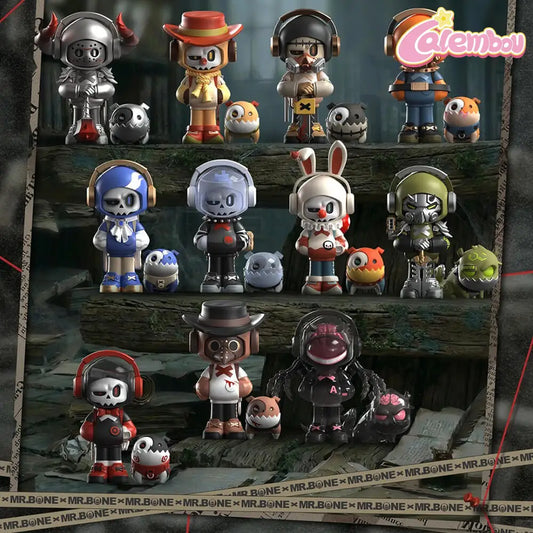
[Freedom Claim Electronic Pet Game World Series BJD Doll Blind Box]: Set against the backdrop of "Electronic Pet Game World," each character is accompanied by an electronic pet, creating a trendy toy world full of digital fantasy.
-
[Eve Lynna Dream Paradise Series Action Figure BJD Blind Box]

2. Choose MJD (Mechanical Jointed Doll) If:
-
You Want Convenience: You want to frequently and frequently change the doll's parts, and you also want it to be quick.
-
You Prefer Stability: You want the doll to hold a specific pose rock-steady for a long time.
Top MJD Recommendations:
-
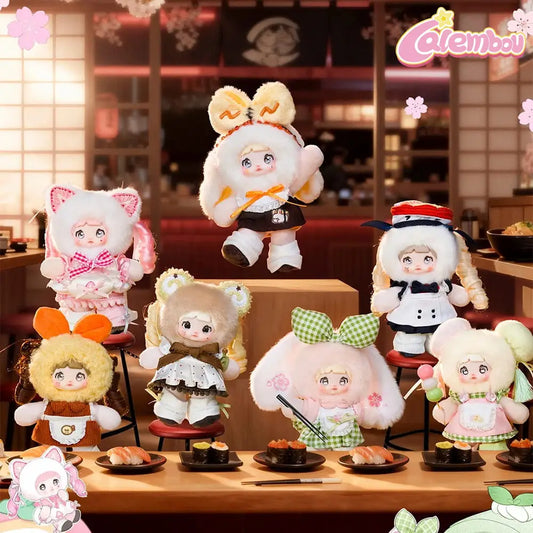
[Kiseki Vintage Treasures Series MJD Doll Blind Box]: Each MJD doll comes from the fantastical world of "Alice who escaped from the tea party," with independent yet interconnected character designs.
-
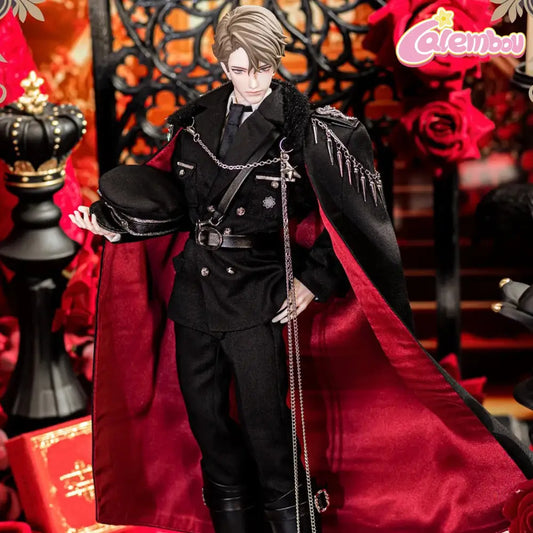
[The Past In Sicily Series MJD Doll Blind Box]: Strong thematic narrative setting & rich characters: Each figure represents a male character in the game of night, giving the figure a deep "character background + emotional tension".
Please purchase these items from authorized official stores or authorized retailers. These collections are available at Calembou.

Conclusion
Ultimately, neither system is inherently superior; they are simply two different engineering approaches that have evolved to offer stunning detail and quality. Whichever you choose depends primarily on which doll series appeals to you more. If you like both, consider this: if you prioritize smooth, natural movement and the durability of interchangeable joint systems, choose ball-jointed dolls (BJDs); if you value stable poses and ease of mechanical maintenance, choose mechanized joint dolls (MJDs).